

Crop Micronutrients & Chelated Fertilizers
Micronutrients are used in smaller quantities than nitrogen, phosphorus and potassium, but they can still influence early growth, plant health and yield. We help growers match the right nutrient, source, timing and application method to each acre so every product has a clear agronomic job to do.
Micronutrient Decisions Should Start With the Need — Then We Match the Product.
A micronutrient product is most useful when we can explain what nutrient we are trying to supply, why the field may need it, and where the application fits the overall fertility program.
Soil chemistry, pH, crop stage, weather, tissue results, starter programs and field history can all change availability and response. That is why field-by-field information helps us place micronutrients where they have the best chance to perform.
Use soil testing, tissue information, field history and crop stage to define the opportunity. Then choose the product form — whether that is a single-nutrient source, a chelated product or a broader micronutrient package — that best fits the acre.
Different Micronutrients Do Different Jobs.
Visual symptoms can start the conversation, but pairing them with soil and tissue information helps us make more confident micronutrient recommendations. These nutrient roles help show what each nutrient contributes to crop performance.
Zinc
Supports enzyme systems, growth regulation and early crop development. Zinc availability is often strongly influenced by soil chemistry and pH.
Manganese
Plays important roles in photosynthesis and enzyme activity. Field conditions and soil chemistry can affect manganese availability even when total soil levels are not low.
Boron
Supports cell-wall development, reproductive growth and nutrient movement. When rate and placement are managed well, boron can be a valuable part of a balanced fertility program.
Iron
Important in chlorophyll formation and plant metabolism. Iron availability is often more about soil conditions and chemistry than simply total iron present in the soil.
Copper
Needed for enzyme activity and several plant metabolic processes. Where crop demand and field conditions support it, copper can be a useful targeted addition to the fertility program.
Magnesium & Molybdenum
Magnesium is central to chlorophyll, while molybdenum is important in nitrogen metabolism and has particular relevance to legume nitrogen fixation and nodulation.
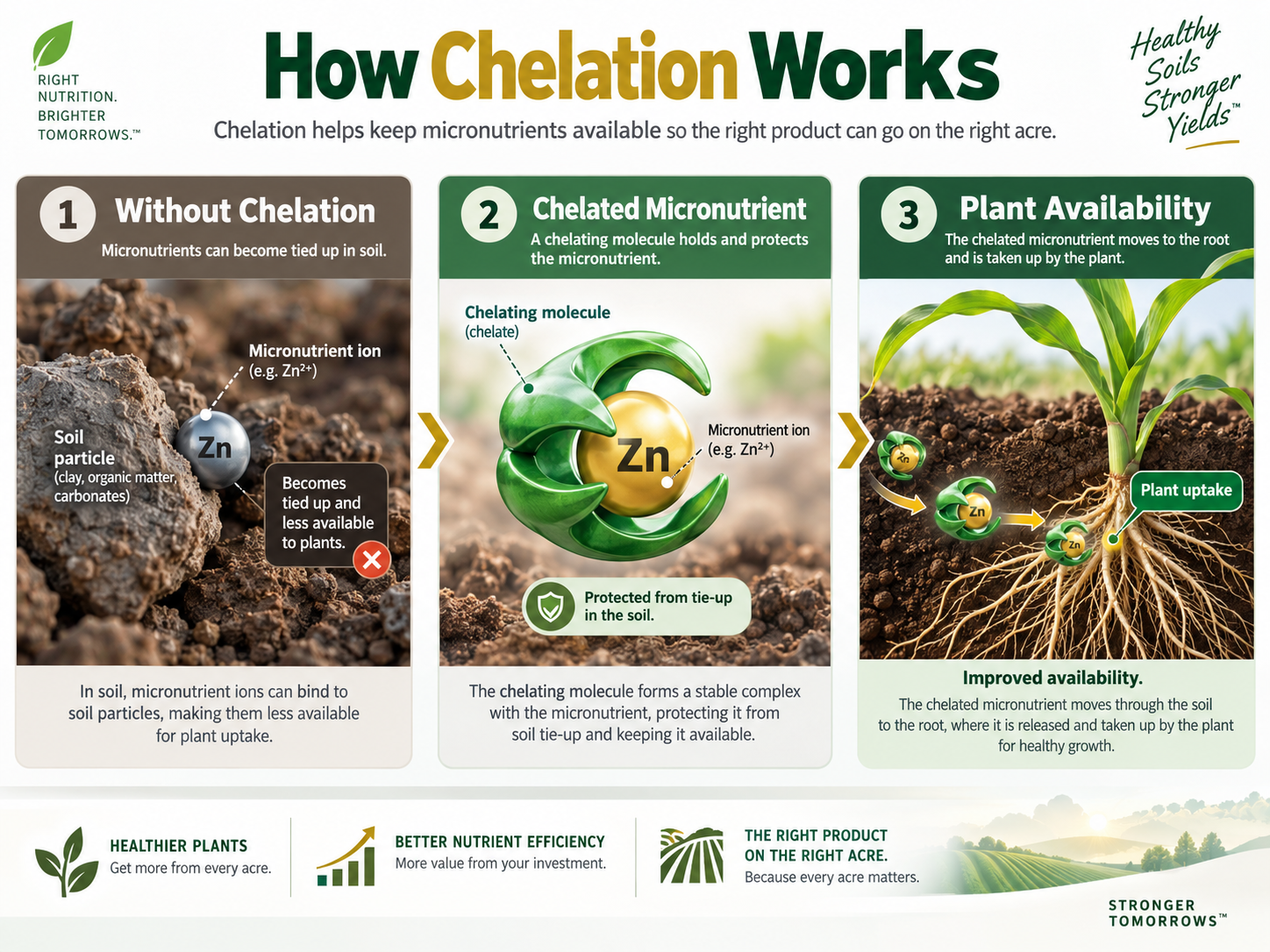
Why Chelation Adds Value in a Micronutrient Program.
A nutrient analysis tells us what is in the product. Chelation adds another layer of value by helping that nutrient stay available and perform more consistently in the fertilizer solution, spray tank and soil environment.
BRANDT Sequestar products use chelation to help protect micronutrients from reactions that can reduce availability. That is especially useful when a micronutrient needs to work alongside fertilizers, variable water chemistry or other components of a complete fertility program.
- Availability: chelation helps keep the micronutrient in a more plant-available form.
- Compatibility: formulation matters when micronutrients are being added to liquid fertilizer or complex tank mixes.
- Placement flexibility: depending on the specific label, chelated nutrients can fit soil, starter, fertigation or foliar uses.
- Better fit by acre: chelated sources give us another tool for matching the right product to the right field situation.
Build the Program Around a Clear Nutrient Objective.
Our micronutrient lineup includes single-nutrient chelates, boron, molybdenum and broader mixes. These are examples of products we use to match the product to the crop, timing and acre.
 SEQUESTAR 9% Zn
BRANDT Sequestar 9% Zn
A fully chelated EDTA zinc source that fits well where a liquid zinc product is needed for starter, soil or foliar micronutrient programs.
View Sequestar 9% Zn →SEQUESTAR 6% MnBRANDT Sequestar 6% Mn
A liquid chelated manganese source for targeted manganese nutrition, with formulation designed to help protect nutrient availability in challenging fertilizer and soil conditions.
View Sequestar 6% Mn →LIQUID BORON 10%BRANDT Liquid Boron 10%
A concentrated liquid boron source labeled for soil and foliar use across field and row crops, giving flexibility when boron is part of the nutrient plan.
View Liquid Boron 10% →MANNI-PLEX MoBRANDT Manni-Plex Mo
A foliar molybdenum product designed for plant uptake and movement to growing points. Molybdenum has particular importance in nitrogen metabolism and legume nodulation.
View Manni-Plex Mo →SEQUESTAR 4.5% FeBRANDT Sequestar 4.5% Fe
A liquid chelated iron source for situations where iron nutrition and compatibility with the rest of the fertility program need to be managed together.
View Sequestar 4.5% Fe →SEQUESTAR 7.5% CuBRANDT Sequestar 7.5% Cu
A fully chelated EDTA copper source that gives us a targeted option when copper fits the crop, tissue information and field situation.
View Sequestar 7.5% Cu →Better Information Helps Put the Right Micronutrient on the Right Acre.
Micronutrient rates may be small, but the return can be meaningful when the product is matched to the right situation. Good information helps us place zinc, manganese, boron, iron and other nutrients with more confidence.
Baseline Rx can help us understand the soil environment and nutrient relationships, while tissue testing adds an in-season look at what the plant is taking up. Field history, crop stage and visual symptoms help complete the picture.
Five Questions Worth Answering.
The goal is to choose a micronutrient product with a clear agronomic fit so the program is easier to justify, easier to evaluate and more likely to pay.
Ask an Agronomy QuestionCommon Questions From Growers.
Are micronutrients a replacement for N, P and K?
No. Micronutrients are part of a complete fertility program, but they do not replace the macronutrients required in much larger quantities.
What does “chelated” mean?
Chelation means the nutrient is complexed with a chelating agent that helps protect it from reactions that can reduce availability. The specific chelate and use should still match the label and application.
Should every field receive zinc or manganese?
Some fields respond more consistently than others. Soil chemistry, fertility history, crop and timing all influence response, which is why we like targeting the nutrient where it has the best chance to pay.
Can micronutrients go in starter fertilizer?
Some products are designed to fit liquid fertilizer programs, while others are better suited to foliar or other applications. Compatibility and labeled use should determine the choice.
Can tissue testing help?
Yes. Tissue testing gives an in-season snapshot of nutrient concentration in the plant and can be useful when interpreted alongside crop stage, soil information and field history.
Do you ship micronutrients outside Ohio?
Many products can ship by parcel, freight or supplier-direct routes depending on package size and destination. Contact us for availability and delivered pricing.
Tell Us the Nutrient, Crop and Field Situation.
We can help compare formulations, application routes, package sizes and timing so you can move forward with the micronutrient product that best fits the agronomy and the acre.