
Put Biology to Work on a Specific Job.
Crop biologicals can support residue breakdown, nutrient cycling, root-zone activity and at-planting performance — but only when the product, timing and field goal line up. EZ Custom Ag helps growers sort through the category and choose biological tools that have a reason to be on the acre.
“Biological” Is a Category — Not a Recommendation.
Agricultural biologicals include a wide range of microbial, biostimulant and biologically based products. They do not all contain the same organisms, perform the same function or belong at the same timing.
That is why our first question is not, “Which biological do you want?” It is, “What are you trying to accomplish?” A residue-management product has a different job than an in-furrow microbial product. A planter-box treatment has a different fit than a broadcast biological intended to support nutrient cycling.
When the goal is defined first, it becomes much easier to decide whether biology belongs in the program — and how to measure whether it earned its place.
Define the problem, application timing, compatibility requirements and the result you are trying to measure. If those pieces are unclear, the next step may be more information rather than another input.
Four Common Jobs We Look At.
These are not interchangeable claims. They are different management goals that call for different formulations, timings and expectations.
Residue Breakdown
Support decomposition of corn stalks, soybean residue and other crop material so nutrients tied up in residue can move back through the system.
Nutrient Cycling
Use microbial tools designed to interact with nutrient pools and help support biological processes involved in nutrient availability and cycling.
Root-Zone Biology
Place biology near the seed or root zone when the product and application system are designed for an at-planting or in-furrow fit.
Planter-Box Treatment
Add a biological component at planting through products designed to fit the planter-box workflow rather than creating another liquid application pass.
The Right Biology in the Wrong Place Is Still the Wrong Program.
Microbial products are living or biologically active tools with specific use patterns. Application method, timing, environment and compatibility all matter. We want to understand how the product gets onto the acre before we recommend it.
- Seed or planter box: simple at-planting placement when the product is designed for direct seed contact or planter use.
- In-furrow: positions a compatible microbial product directly in the early root-zone environment.
- Broadcast or foliar: fits products designed for wider field coverage or in-season application.
- Fall or residue timing: targets crop residue and nutrient cycling after harvest or ahead of the next crop.
Products With a Defined Place in the Toolbox.
We would rather highlight a smaller group of products we understand than create a wall of biological names with no explanation of where they fit.

Meltdown
A biological residue-management product designed to support breakdown of crop residue and nutrient cycling after harvest or ahead of the next crop.
View Meltdown →
Biocast MAX
A microbial biostimulant positioned around nutrient cycling and nutrient availability, with broadcast and in-crop application options depending on the program.
View Biocast MAX →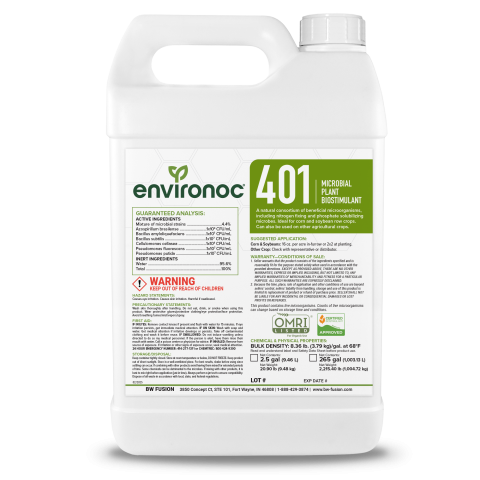
Environoc 401
A diverse microbial product commonly positioned in-furrow to put biology close to the developing root zone and support soil biological processes early in the season.
View Environoc 401 →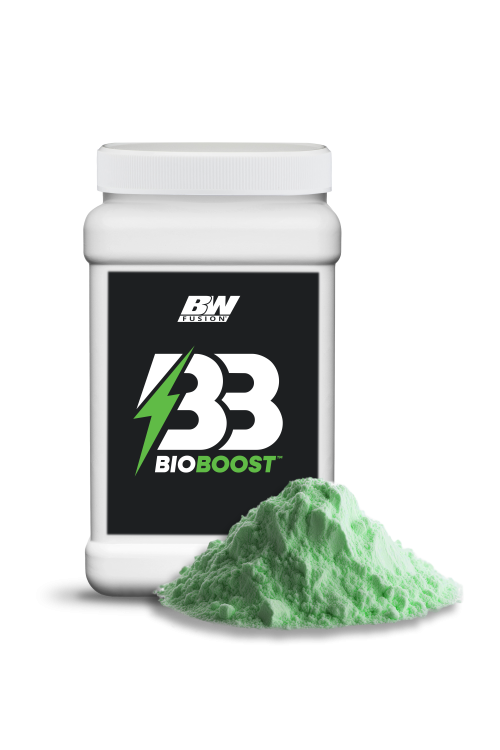
BioBoost Corn
A planter-box treatment designed to replace traditional talc/graphite while adding a biological component without creating another liquid application pass.
View BioBoost Corn →Biology Should Be Part of the Residue Management Plan.
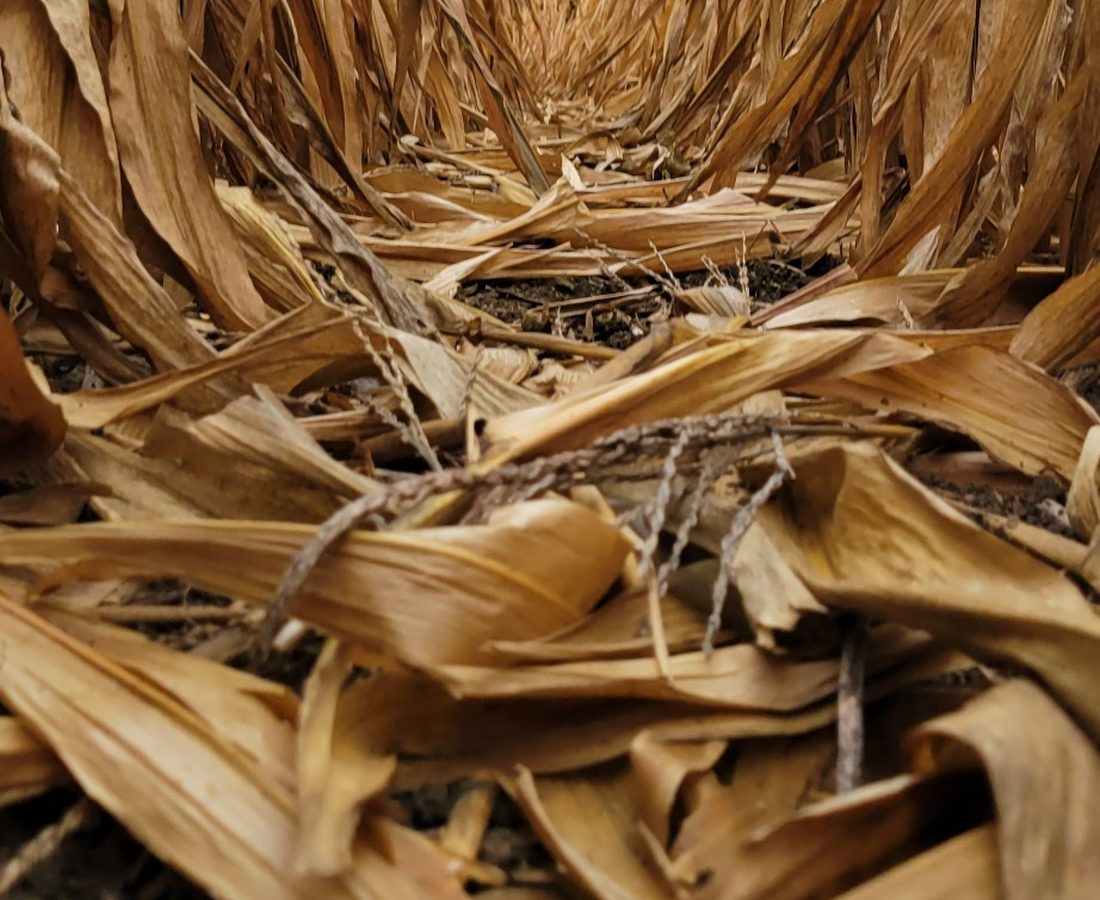
High-yield corn can leave a heavy mat of stalks, leaves and husks behind. That residue contains nutrients, but those nutrients are not automatically available to the next crop on the timetable we want.
Residue management is one of the clearest places to give a biological product a specific job: support decomposition and nutrient cycling while considering tillage system, residue load, moisture, temperature and timing. Meltdown is the product we most often connect to that conversation.
Ask Better Questions Than “Does It Yield?”
A single yield number rarely tells the whole story. A useful biological decision starts with a defined mechanism, a realistic application fit and a way to evaluate the response on your own acres.
Talk Through a Product →Common Questions From Growers.
What are agricultural biologicals?
Agricultural biologicals are a broad group of products that use microorganisms, biological compounds or other biologically based technologies to perform specific crop or soil functions. The category includes products for nutrient cycling, residue management, seed and root-zone use, biostimulation and biological crop protection.
Are all biological products basically the same?
No. Products can differ in organisms, concentration, formulation, intended function, application timing and compatibility. We prefer to compare them by the job they are designed to do rather than treating “biological” as one interchangeable category.
Can biologicals replace fertilizer?
Some products are designed to improve nutrient cycling or availability and may be used as part of a fertility-efficiency strategy. That does not mean every biological should automatically replace a fixed amount of fertilizer. Any fertility reduction should be based on the specific product program, field information, economics and current manufacturer guidance.
Where do biologicals fit in corn and soybean programs?
Depending on the product, they may fit on the seed, in the planter box, in-furrow, broadcast, foliar or with residue-management applications. The right timing depends on the organism, formulation and job the product is intended to perform.
Can biologicals be tank mixed?
Some can, but compatibility should never be assumed. Always use the current product label or manufacturer directions, follow required mixing procedures and verify compatibility with the products in the intended tank mix.
How should I test a biological on my farm?
Start with a defined question and a fair comparison. Use enough acres or replicated strips to reduce noise, keep the rest of the management as consistent as practical and decide in advance what you will measure at harvest or during the season.
Not Sure Which Biological Fits?
Tell us what you are trying to accomplish, what application equipment you have and what crop program is already in place. We can help decide whether a biological makes sense — and which type deserves a closer look.