
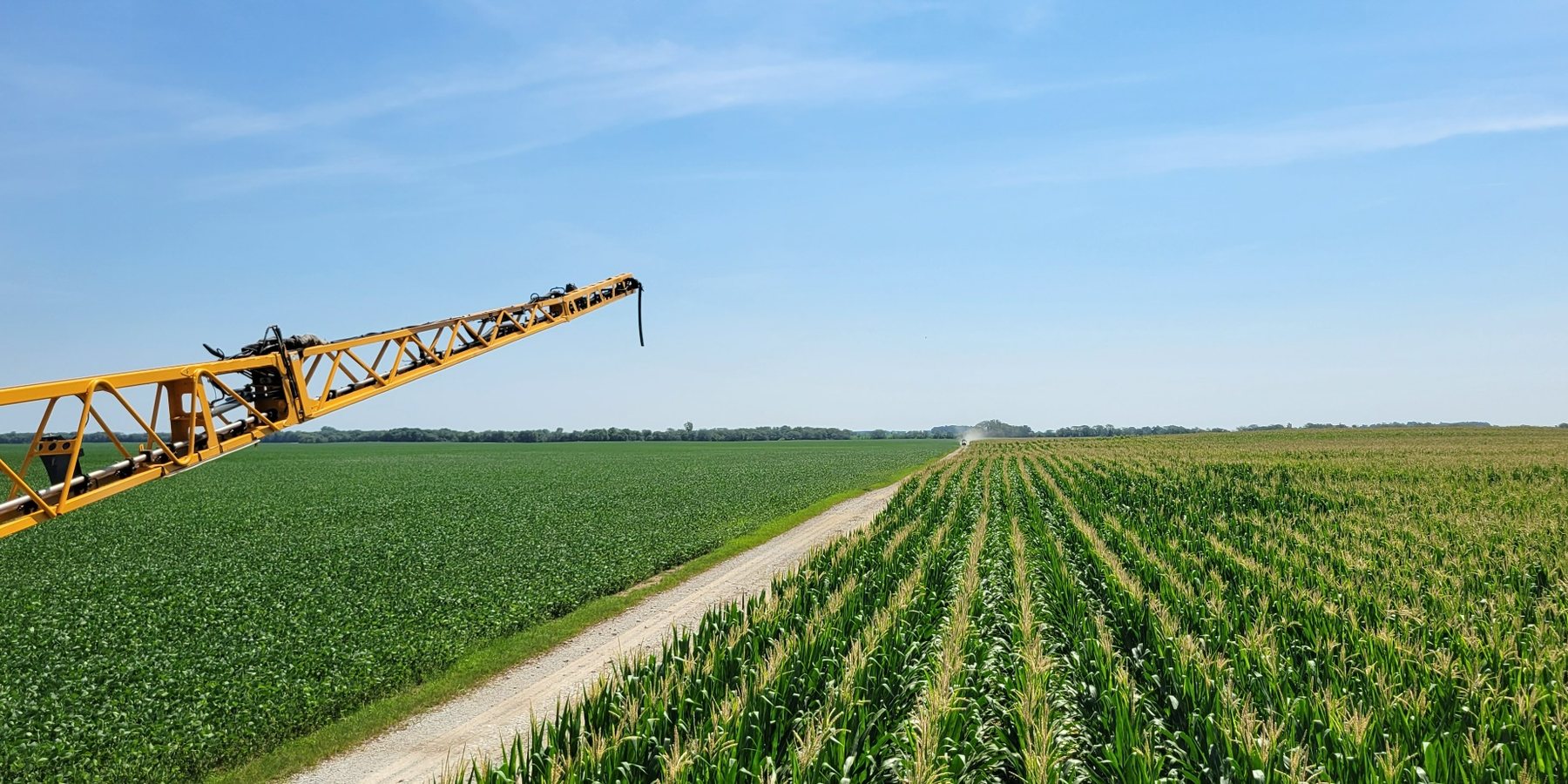
Use Foliar Nutrition When the Crop Has a Reason for It.
Targeted in-season nutrition for corn, soybeans and other crops — built around crop stage, nutrient demand, tissue information, application timing and the pass you are already making.
Foliar Nutrition Is a Timing Tool — Not a Replacement for Fertility.
A strong soil fertility program still carries most of the crop’s nutrient demand. Foliar fertilizer gives us another route when timing, crop stage, nutrient mobility, root-zone conditions or a specific in-season need makes a leaf-applied product worth considering.
That is why we do not start with a jug. We start with the crop, the growth stage, what the plant may need, what is already in the spray tank and what result we are trying to create or measure.
Sometimes that points toward potassium and boron during reproductive development. Sometimes it is manganese, a broader micronutrient package, early-season nutrition or stress support. Sometimes the right answer is to leave the tank alone.
Crop stage, nutrient need, tissue information, compatibility and application timing should drive the decision. Foliar feeding makes the most sense when we can clearly explain what the product is there to do.
Four Reasons We Consider an In-Season Nutrition Pass.
These are different agronomic situations. A product that fits one does not automatically fit the others.
Targeted Nutrient Demand
Supply a specific nutrient or nutrient package when crop stage and plant demand create a practical in-season opportunity.
Tissue-Guided Decisions
Use tissue information and field observations to identify a nutrient concern, then choose a product and timing that actually match the situation.
Pass Efficiency
When compatibility and labeling allow, pair nutrition with a fungicide, herbicide or other existing pass rather than creating unnecessary field traffic.
Stress & Recovery Support
Use products designed around plant stress response or recovery when crop conditions and timing justify that type of support.
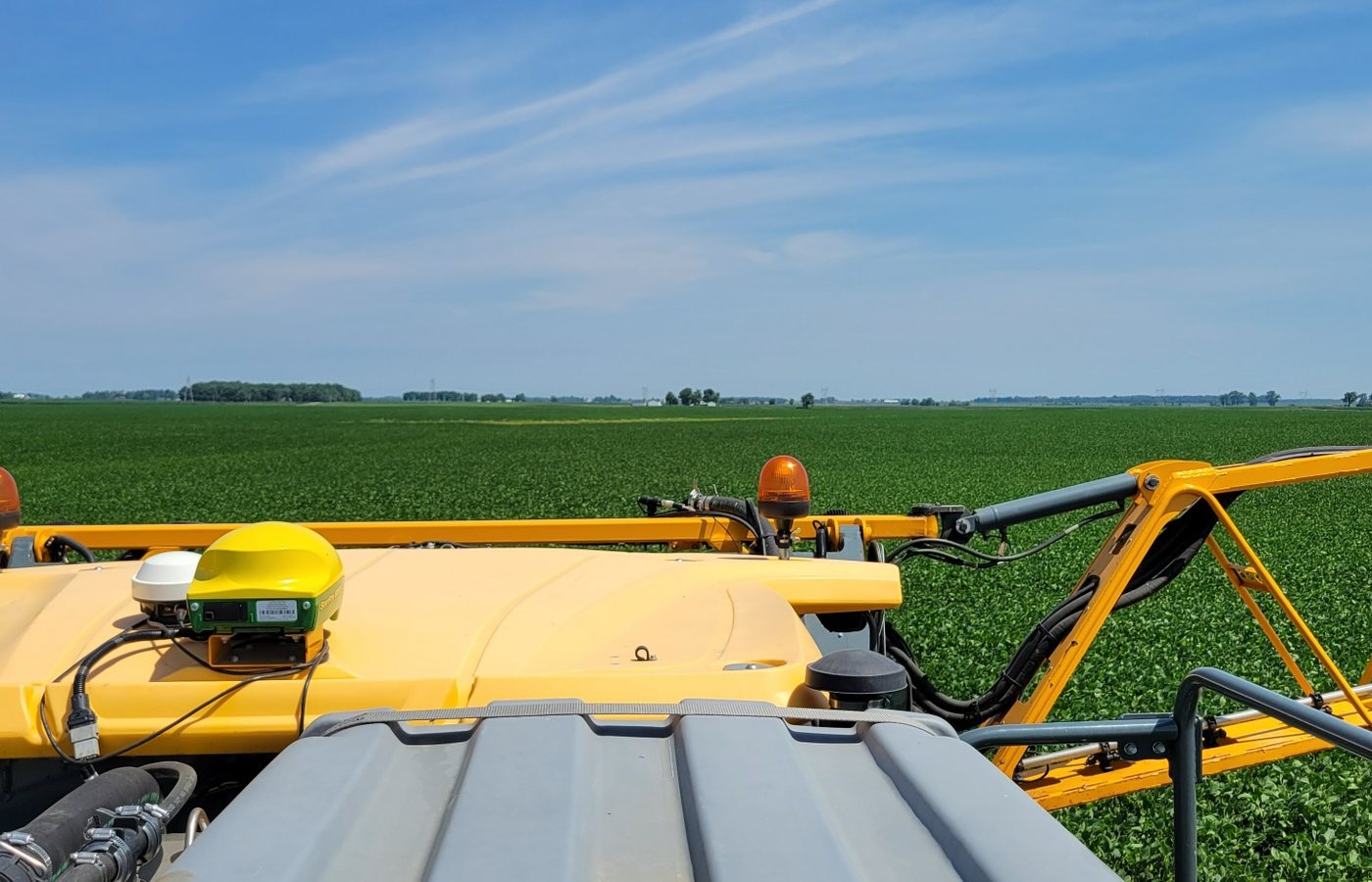
Foliar Nutrition Works Best When Timing and Tank Fit Are Both Right.
One of the practical advantages of foliar nutrition is the ability to place a nutrient application into a pass that may already be planned. But convenience alone is not enough. The product still has to match the crop need and the tank still has to be compatible.
- Growth stage: choose the timing around crop demand rather than simply applying because the sprayer is in the field.
- Compatibility: follow current product labels and manufacturer guidance for tank-mix partners, water quality and order of addition.
- Rate: use the labeled rate and do not assume that more nutrient in the tank automatically means a better response.
- Coverage: foliar products need to reach plant tissue, so carrier volume, canopy and application conditions still matter.
Different Products for Different In-Season Jobs.
Rather than treating every foliar as interchangeable, we organize the lineup by the nutrient package or management job it is designed to fill.
 SMART K B
BRANDT Smart K B
A 2-0-16 foliar potassium formulation with 2.5% boron and 0.2% molybdenum, commonly positioned when in-season potassium and boron fit the crop stage and program.
View Smart K B →SMART QUATRO PLUSBRANDT Smart Quatro Plus
A 5-0-0 Smart System foliar that supplies sulfur, boron, manganese, molybdenum and zinc for in-season micronutrient support in a formulation designed for complex tank mixes.
View Smart Quatro Plus →SMART MN PLUSBRANDT Smart Mn Plus
A 5-0-0 foliar manganese product with sulfur, built for targeted in-season manganese nutrition and efficient foliar delivery.
View Smart Mn Plus → JUICE
JUICEJuice
A 3-3-2 early-season foliar from Agra Crop Solutions that combines macronutrients, a broad micronutrient package and additional biostimulant components for a more complete in-season nutrition pass.
View Juice → AmiNo
AmiNoBW AmiNo
An in-season BW Fusion product positioned around supplemental nitrogen and amino-acid-based crop support, with a wide application window depending on the program.
View AmiNo →
Relax RX
An in-season crop-support product built around plant stress response and recovery. We look at it when conditions create a clear stress-management reason for the pass.
View Relax RX →Crop Stage Tells Us When. Tissue and Field Information Help Tell Us Why.
Foliar nutrition gets more useful when it is tied to something measurable. Crop stage, tissue testing, visual symptoms, yield goal, weather, field history and the rest of the fertility program can all change what makes sense.
We do not need every field to have a laboratory result before applying a foliar product, but the more targeted the decision is, the easier it becomes to evaluate whether the product did the job it was given.

Five Questions Worth Answering.
A foliar program does not need to be complicated, but it should have enough logic behind it that we know what success is supposed to look like.
Use Our Farm ToolsCommon Questions About Foliar Fertilizer.
Does foliar fertilizer replace soil fertility?
No. We view foliar nutrition as a targeted in-season tool that complements a sound soil fertility program rather than replacing the crop’s primary nutrient supply.
When is foliar nutrition most useful?
It is most useful when the crop stage, nutrient demand, tissue information, field conditions or an existing application pass create a clear reason for a foliar treatment.
Can foliar nutrients be mixed with fungicides or herbicides?
Some products are designed for complex tank mixes, but compatibility is product- and partner-specific. Always follow current labels, manufacturer directions and jar-test guidance when appropriate.
Should I tissue test before applying foliar nutrition?
Tissue testing is not required for every foliar decision, but it can provide valuable context and is especially useful when the goal is to diagnose or track a specific nutrient concern.
Tell Us What You Are Trying to Accomplish.
Give us the crop, growth stage, field situation and the pass you are planning. We will help narrow the foliar options down to products that actually fit — or tell you when the acre does not need another input.